Best Ways to Crank Up Scaffolding Safety and Efficiency?
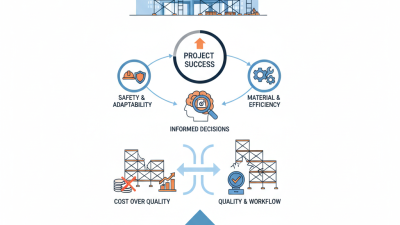
Ensuring safety and efficiency in scaffolding is crucial in construction. These two aspects often seem at odds. However, we can find ways to crank up scaffolding safety while enhancing productivity. A well-structured scaffold not only protects workers but also keeps projects on schedule.
One effective approach involves regular training sessions for the staff. These sessions should focus on the latest safety standards and techniques. Investing time in education helps workers understand the importance of using scaffolds correctly. Cranking up scaffolding safety starts with informed personnel. Additionally, proper maintenance of scaffolding equipment can prevent accidents. Regular inspections can identify wear and tear before they become serious issues.
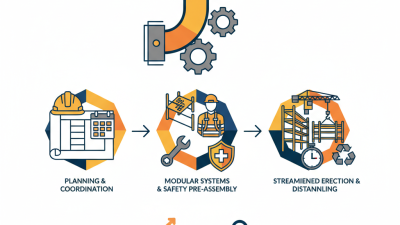
It is essential to rethink traditional scaffolding methods. Many crews rely on outdated systems that may not be the safest. Adopting innovative designs can significantly improve efficiency. For example, modular scaffolding systems can be quicker to assemble and disassemble. This not only saves time but also reduces the chances of accidents. Understanding the balance between safety and efficiency is a continuous journey in construction.

Understanding the Importance of Scaffolding Safety in Construction
Scaffolding safety is crucial in construction. According to a report by the Occupational Safety and Health Administration (OSHA), falls account for 33% of construction-related fatalities. This underscores the need for stringent safety measures. Proper scaffolding can safeguard workers and improve efficiency at job sites. Regular inspections, adequate training, and clear safety protocols can help reduce incidents.
Training workers on scaffolding use is vital. The National Institute for Occupational Safety and Health (NIOSH) emphasizes that informed workers are less likely to encounter hazards. In a study, teams with safety training reduced their injury rates by 40%. Compliance with safety standards is non-negotiable. Each worker must understand their role in maintaining a safe environment.
Not all scaffolding practices are flawless. Common issues include improper assembly and insufficient maintenance. These can lead to instability. Regular audits and open dialogue among team members can address these shortcomings. Construction sites should foster a culture of safety. Workers need to feel comfortable reporting hazards. Only through collective efforts can scaffolding safety truly improve.
Best Ways to Crank Up Scaffolding Safety and Efficiency
| Safety Measure |
Description |
Efficiency Improvement |
| Regular Inspections |
Conduct routine checks to ensure structural integrity and compliance with safety standards. |
Prevents accidents and costly downtime. |
| Training & Certification |
Provide comprehensive training for all personnel involved in scaffolding operations. |
Enhances skill and reduces the likelihood of accidents. |
| Stabilization Techniques |
Utilize braces and ties to secure scaffolding to structures. |
Increases safety while allowing faster assembly. |
| Proper Load Management |
Assess and adhere to weight limits for scaffolding. |
Minimizes risks of collapse, thus maintaining work flow. |
| Use of High-Quality Materials |
Select scaffolding materials that meet industry standards. |
Enhances durability and reduces maintenance costs. |
Key Regulations and Standards for Scaffolding Safety Compliance
Scaffolding safety hinges on adhering to established regulations and standards. These guidelines ensure that workers can perform tasks without significant risks. OSHA standards in the U.S. dictate minimum requirements for scaffold design, construction, and use. Familiarizing yourself with these regulations is essential for compliance and worker safety.
Regular inspections are crucial. A qualified person should check scaffolds before use. Look for structural integrity, levelness, and stability. It's common to overlook small signs of wear. Yet, these can lead to accidents. Ensure guardrails and toe boards are in place. These additions prevent falls and provide extra security.
Training programs for workers should be prioritized. Workers need to know safe practices and recognize hazards. Often, gaps in knowledge lead to unsafe conditions. Encourage a culture of safety and open communication. Workers should feel comfortable reporting issues. Transparency is key for continuous improvement.
Best Practices for Inspecting and Maintaining Scaffolding Structures
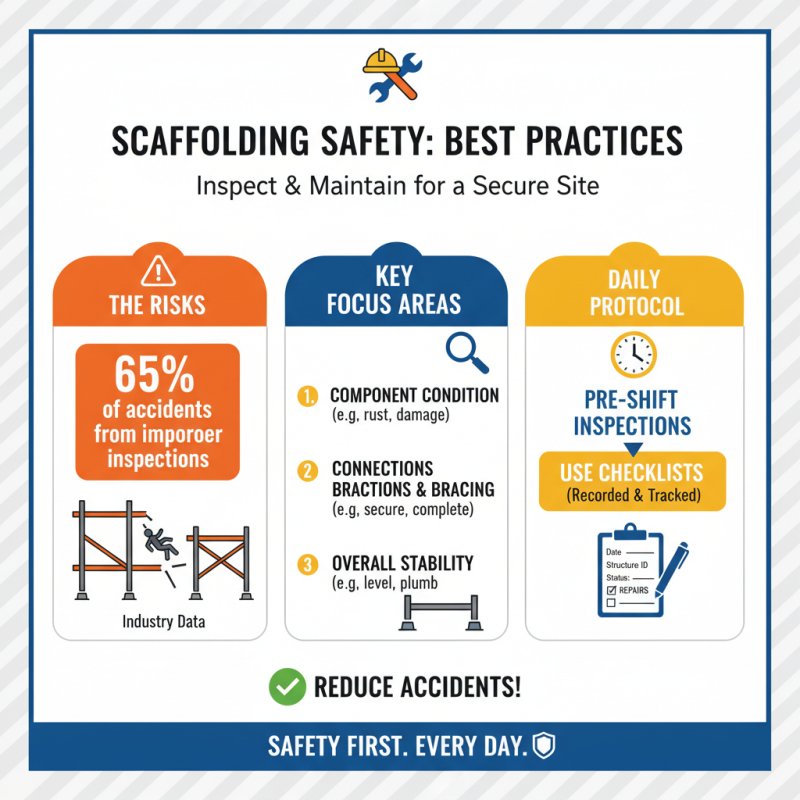
Inspecting and maintaining scaffolding structures are critical for ensuring safety on construction sites. According to industry data, nearly 65% of scaffolding-related accidents occur due to improper inspections. Regular and thorough inspections can significantly reduce these risks. Inspectors should focus on the condition of components, connections, and overall stability. Daily inspections before use are essential. A recorded checklist can help track the condition and compliance of each scaffolding structure.
Proper maintenance is often overlooked. Many workers assume that if scaffolding looks good, it is safe. However, wear and tear can compromise structural integrity. In fact, a study from the Occupational Safety and Health Administration (OSHA) reveals that inadequate maintenance is a leading cause of scaffolding failures. Regularly scheduled maintenance, including replacing worn parts and ensuring proper anchoring, should be a priority.
It's vital to involve workers in safety training. However, around 40% of workers report they don’t feel adequately trained to inspect scaffolding. This gap in training can lead to accidents. Building a culture of safety means fostering an environment where workers feel empowered to speak up about issues. Investing in ongoing education and accessible resources can promote a safer working environment.
Training and Certification Programs for Scaffolding Safety Personnel
Training and certification programs are vital for scaffolding safety personnel. The construction industry continues to face safety challenges. According to the Occupational Safety and Health Administration (OSHA), scaffolding accounted for
2.3% of all fatalities in construction between 2011 and 2015. Proper training can significantly mitigate these risks.
Certification programs provide structured learning, covering topics such as assembly, safety standards, and hazard recognition. A report by the National Institute for Occupational Safety and Health (NIOSH) indicates that workers who receive scaffold safety training are
25% less likely to experience accidents related to falls. This improvement directly impacts project efficiency and worker morale.
Despite these benefits, a gap exists in training accessibility. Many workers lack access to quality certification programs. Additionally, some training can be outdated or overlook newer regulations. It’s crucial for companies to regularly assess and update their training materials. Reliable training builds a solid foundation for safety, but ongoing evaluation is necessary to ensure effectiveness.
Innovations and Technology to Enhance Scaffolding Efficiency and Safety
Scaffolding safety and efficiency are critical for construction projects. Recent studies show that nearly 70% of scaffolding accidents result from improper assembly and maintenance. Innovations in technology are helping address these issues. Advanced scaffolding systems now integrate sensors that monitor stress and stability in real-time, greatly enhancing worker safety.
Tips: Regularly inspect scaffolding components for wear and tear. Use technology to track the condition of scaffolding during projects.
Automation also plays a vital role. Companies are now employing drone technology to assess scaffold conditions accurately. Drones can quickly survey large areas, identifying potential hazards that might be missed during manual inspections. This capability significantly reduces the risk of accidents. Adopting such technology can lead to a measurable decrease in scaffolding-related incidents.
Tips: Train workers on the importance of reporting any unusual findings immediately. Encourage a culture of safety and communication.
Moreover, data analytics is another emerging tool. By analyzing accident reports and operational data, companies can identify patterns that lead to accidents. This proactive approach allows businesses to implement preventive measures effectively. However, it requires investment and commitment, which some may overlook. Ignoring data insights can result in repeated mistakes and a lack of progress in safety practices.